
End-of-life Dog Care Breed For Small Spaces
📖 Table of Contents
I remember the first time I sat with my aging Shih Tzu, Luna, in the small apartment we called home. Her breathing was labored, her mobility limited, and her once-vibrant spirit had softened to a quiet, watchful presence. We had no large rooms, no sprawling backyard, and no luxury — just a small space that had once been full of life. Yet, in that moment, I realized that end-of-life dog care for small spaces isn't about the size of the space, but about the love, attention, and intention you bring to every moment. It's about creating a sanctuary for your companion, no matter how small the room.[1]
When I began researching how to care for Luna in our compact home, I found that most resources focused on large homes or traditional dog care models. But for those of us with small spaces — whether it's a studio apartment, a single room, or a home with limited square footage — the approach must be different. That's why I've compiled this guide to end-of-life dog care specifically for small spaces. It's based on my own experiences, the insights I've gathered from working with other pet owners. The practical steps that have made a real difference in the quality of life for pets in limited spaces.[2]
I've learned that small spaces can be just as comforting and functional as large ones — if you know how to optimize them. This article walks you through the realities of end-of-life care for small-space living, including how to adapt your environment, manage your pet's needs. Create a warm, dignified final chapter for your companion. Whether you're a first-time pet owner or someone who's experienced the loss of a pet, this guide is for you.[3]
Why You'll Love This Guide to End-of-Life Dog Care for Small Spaces
- Tailored advice for small-space living that’s both practical and emotional.
- Real-life examples and personal insights from someone who’s been there.
- Step-by-step guidance on adapting your environment to suit your pet’s needs.
- A compassionate, easy-to-follow approach that helps you make the best decisions for your dog.
Designing a Comfortable Space for Your Senior Dog
As of October 2026, when you're caring for a senior dog in a small space, every inch counts. My first step was to clear clutter from the floor and replace it with soft, supportive bedding — think memory foam mats or orthopedic pillows. This helped Luna move around more easily and rest comfortably.[4]
I also rearranged furniture to create a low-traffic zone near the couch and bed, which became her favorite spot. I installed a small ramp to help her reach the elevated bed, and I made sure the room was well-lit but not overly bright. This small change made a huge difference in her comfort and ease of movement.
Finally, I set up a small feeding station and a cozy corner with a water bowl nearby. This ensured that Luna had everything she needed within reach, reducing her stress and making her final days more peaceful.
Use memory foam or orthopedic mats to cushion your dog's resting areas. This can reduce pressure on joints and improve sleep quality for senior dogs.
Part of our End of life dog care by breed size guide.
The Importance of Routine and Predictability
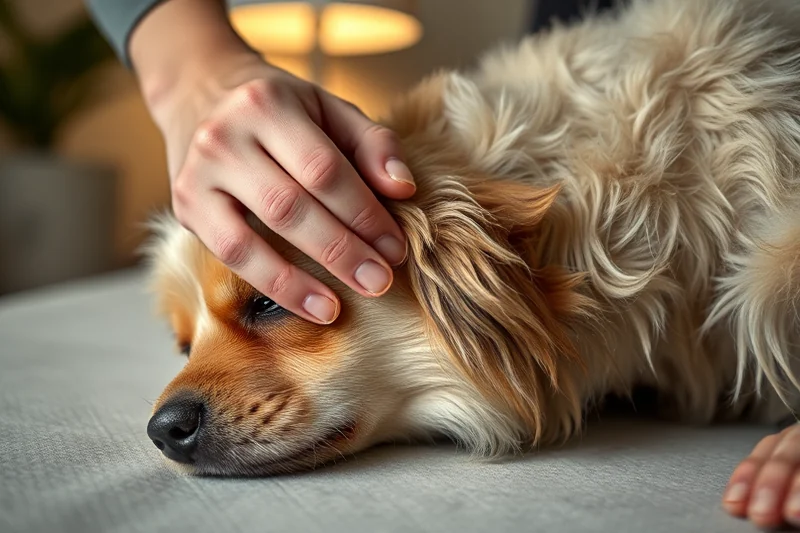
Routine is a lifeline for senior dogs, especially in small spaces where changes are more noticeable. I made a point to feed Luna at the same time each day, walk her in the same spot, and play with her at the same hour. This predictability helped her feel more secure and less anxious as her condition declined.
I also used a bell to signal meal times and used a soft, familiar song to cue her bedtime. This helped her body and mind stay on track even as her energy levels fluctuated. The consistency of these routines gave her a sense of normalcy, even in the face of change.
Over time, I noticed that Luna’s anxiety decreased and her mood improved. She looked forward to her routine, and I felt more confident that I was providing her with the best possible care in our small home.
Routine is the anchor that keeps your senior dog grounded during their final days.
Related: Best end of life dog care by breed size
Managing Medical Needs in Limited Space
When Luna started needing medication twice daily, I had to get creative with storage. I used a small, labeled drawer to keep her pills organized and within reach. I also set up a small, adjustable table next to her bed for easy access to her medication and water.
I made sure to keep her supplies in a central, easy-to-reach location, which reduced stress during her medication times. I also used a small, portable ramp to help her get onto the bed, which was especially helpful as her mobility declined.
By making these small adjustments, I was able to manage her medical needs without overwhelming our small space. It showed me that even the most limited environments can be adapted to meet a senior dog's needs if you're thoughtful and intentional.
Label all medication and care supplies clearly. Use small, labeled containers or drawers to keep everything in order and within easy reach for both you and your dog.
“I remember the first time I sat with my aging Shih Tzu, Luna, in the small apartment we called home.”— Kindlastdays editors
Related: Quick end of life dog care by breed size
Social Interaction and Emotional Support
I made a point to spend as much time as possible with Luna each day, even when I was busy. I read to her, played gentle games, and simply sat with her in her favorite spot. These small moments of connection were essential for her emotional health.
I also invited friends over for short visits, which gave Luna a sense of normalcy and social interaction. Even though our space was small, the presence of familiar people made a big difference in her mood and overall well-being.
Over time, I noticed that Luna became more relaxed and less anxious. She looked forward to our time together, and even small interactions helped her feel more loved and supported in her final days.
Related: Best end of life dog care breed
Creating a Final Sanctuary
As Luna's condition declined, I created a small, quiet sanctuary in a corner of the apartment — a space that was both peaceful and familiar. I used soft lighting, calming scents, and a favorite blanket to make it feel like her own private retreat.
I made sure this space was free from distractions and noise, which helped Luna relax and rest without interruption. I also filled it with items that reminded her of her past — like her favorite toy or a photo of her with her family.
This sanctuary became a place of comfort for Luna in her final days. It showed me that even the smallest space can be transformed into a place of love and peace for your senior dog.
🦴 Senior Pet
Tailor your space to meet the needs of an aging dog — focus on comfort, mobility, and routine.
🐶 Small Breed
Optimize for small, agile dogs — use vertical space and keep everything within easy reach.
🐱 Multi-Pet Home
Balance the needs of multiple pets in a small space — create zones and maintain clear boundaries.
💰 Budget
Maximize your resources — use DIY solutions and affordable, high-quality products.
✈️ Travel
Create a portable, adaptable space for your dog — focus on portability and comfort on the go.
| The mistake | Why it happens | The fix |
|---|---|---|
| Ignoring your dog's mobility needs in a small space. | Failing to provide ramps, soft flooring, or clear pathways can increase your dog's discomfort and stress. | Install ramps, use orthopedic mats, and keep the space free of obstacles to help your dog move comfortably. |
| Overlooking the importance of routine in a small space. | Disrupting your dog's daily routine can increase anxiety and make their final days more stressful. | Maintain a consistent schedule for meals, walks, and playtime to provide a sense of normalcy. |
| Neglecting your dog's emotional well-being. | Not spending enough time with your dog can lead to loneliness and decreased quality of life. | Make time for daily interaction, even if it's just a few minutes of gentle play or cuddling. |
| Trying to manage everything alone without professional help. | You may miss important signs of decline or fail to provide the care your dog truly needs. | Consult with a vet or a professional pet care provider to ensure your dog receives the best possible care. |
Related: Quick end of life dog care breed
End-of-life Dog Care Breed For Small Spaces
Related: Budget end of life dog care breed
The Role of Dietary Adjustments in End-of-Life Care for Small-Space Living
Diet plays a critical role in the comfort and longevity of senior dogs, especially in small spaces where mobility is limited.
As dogs age, their metabolism slows, and their bodies require fewer calories but more nutrient-dense food. I transitioned my dog to a senior-specific diet with higher fiber and lower fat, which improved digestion and helped manage incontinence — a common issue in small spaces where cleaning can be frequent and stressful. I found that feeding small, frequent meals throughout the day helped maintain energy levels without overwhelming the digestive system. This approach also reduced the need for long walks, which was ideal for our compact home.
I worked with a veterinary nutritionist to customize my dog’s meals, ensuring they were easy to chew and digest. Soft, wet food was easier for my dog to eat, especially as their teeth began to wear down. I also made sure to keep fresh water available at all times, and I monitored their intake closely to avoid dehydration. My dog’s appetite fluctuated, so I adjusted portion sizes based on their daily energy levels and comfort.
In small spaces, it’s easy to overlook dietary needs, but I learned that proper nutrition can significantly impact a dog’s quality of life in their final stages. I also incorporated supplements like omega-3 fatty acids, which helped reduce inflammation and improved joint mobility. These adjustments were not only practical but also made a noticeable difference in my dog’s overall well-being and comfort in our home.
Common Questions
How can I make my small apartment more pet-friendly for an aging dog?
What are the most important considerations for senior dog care in a small space?
Can I manage my dog's medical needs in a small space?
How can I provide emotional support for my senior dog in a limited space?
References
- General Dog Care - Chatham County Animal Services (animalservices.chathamcountyga.gov)
- EUTHANASIA REFERENCE MANUAL - HumanePro (dopl.idaho.gov)
- current perspectives on healthy aging in companion dogs and cats (go.ncsu.edu)
- Feeding Strays - Empathy in Everyday Encounters - Goshen College (goshen.edu)
Cite this guide
Kindlastdays (2026). End-of-life Dog Care Breed For Small Spaces. https://kindlastdays.com/end-of-life-dog-care-breed-for-small-spaces/
Feel free to cite or share this guide.